Wilmington (937) 382-2347
Fax
(513) 932-1606
Wilmington (937) 382-2347
Fax
(513) 932-1606
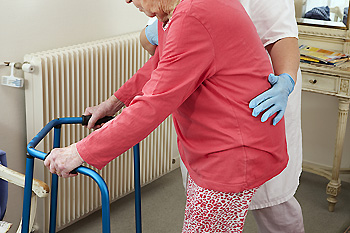
Suffering from a fall as a senior citizen is no joke. As an individual ages, they become more prone to tumbling and tripping both inside and outside of their home. These falls can be life-threatening and may occur on staircases or hard, dangerous surfaces. Although falls may happen for any number of reasons, the health of a senior’s feet can be an influential factor. Therefore, one way to prevent falls from occurring in senior citizens is to strengthen the feet by practicing several simple exercises. These exercises can improve the strength in the senior’s feet muscles and increase balance. One such exercise is known as leg extensions and can be performed by repeatedly extending and raising one leg at a time while sitting in a chair. You can alternate the legs after each extension. The purpose of this exercise is to increase strength and agility in the leg muscles. If stretching seems boring or unappealing, a senior might also try to improve the strength of their feet by walking, practicing tai chi, or performing simple movements in the pool. If you are a senior who is concerned about their likelihood of suffering from a fall, you can contact a podiatrist for more information about strength-building exercises.
Preventing falls among the elderly is very important. If you are older and have fallen or fear that you are prone to falling, consult with Dr. Gerald Perelman from Ohio. Our doctor will assess your condition and provide you with quality advice and care.
Every 11 seconds, an elderly American is being treated in an emergency room for a fall related injury. Falls are the leading cause of head and hip injuries for those 65 and older. Due to decreases in strength, balance, senses, and lack of awareness, elderly persons are very susceptible to falling. Thankfully, there are a number of things older persons can do to prevent falls.
How to Prevent Falls
Some effective methods that older persons can do to prevent falls include:
Falling can be a traumatic and embarrassing experience for elderly persons; this can make them less willing to leave the house, and less willing to talk to someone about their fears of falling. Doing such things, however, will increase the likelihood of tripping or losing one’s balance. Knowing the causes of falling and how to prevent them is the best way to mitigate the risk of serious injury.
If you have any questions, please feel free to contact our office located in Wilmington, OH . We offer the newest diagnostic and treatment technologies for all your foot care needs.
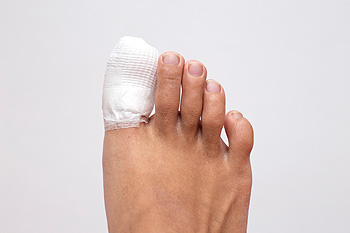
The most common method of differentiating between a broken toe and a bruised toe is to have an X-ray taken. They both can cause severe pain and discomfort. A severely broken toe can look deformed, and the bone can protrude from the toe at an abnormal angle. The symptoms that are associated with both of these types of injuries can include swelling, bruising, and difficulty walking. The buddy taping system for a bruised toe can cause the affected toe to feel better, as a result of the stability it provides. This is done by taping the toe to the toe next to it, and having it remain that way for several days. The buddy taping method works well for broken toes, as it causes the injured toe to remain still as the healing process occurs. In both scenarios, it is suggested to refrain from putting weight on the foot, which gives the broken or bruised toe ample time to heal. If you think you have broken or bruised your toe, it is advised to have it checked by a podiatrist who can guide you toward the proper treatment.
A broken toe can be very painful and lead to complications if not properly fixed. If you have any concerns about your feet, contact Dr. Gerald Perelman from Ohio. Our doctor will treat your foot and ankle needs.
What to Know About a Broken Toe
Although most people try to avoid foot trauma such as banging, stubbing, or dropping heavy objects on their feet, the unfortunate fact is that it is a common occurrence. Given the fact that toes are positioned in front of the feet, they typically sustain the brunt of such trauma. When trauma occurs to a toe, the result can be a painful break (fracture).
Symptoms of a Broken Toe
Generally, it is best to stay off of the injured toe with the affected foot elevated.
Severe toe fractures may be treated with a splint, cast, and in some cases, minor surgery. Due to its position and the pressure it endures with daily activity, future complications can occur if the big toe is not properly treated.
If you have any questions please feel free to contact our office located in Wilmington, OH . We offer the newest diagnostic and treatment technologies for all your foot and ankle needs.

Suffering from this type of pain? You may have the foot condition known as Morton's neuroma. Morton's neuroma may develop as a result of ill-fitting footwear and existing foot deformities. We can help.
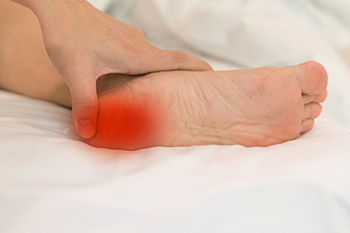
There is a growth plate in the heel of the foot that is known as the calcaneal apophysis. This is the area that connects the Achilles tendon and the plantar fascia to the heel. The foot condition that is known as Sever’s disease occurs as a result of excess tension on the Achilles tendon, or possibly from an injury to the heel. This generally affects children and young teenagers who participate in sporting activities. Common symptoms can include gradual heel pain, and many patients describe it as feeling like a bruise. Pain may be felt in the heel area only. Sever’s disease often develops from participating in high-impact sports such as basketball, football, or baseball. To confirm a diagnosis of Sever’s disease, a physical exam will be performed, and occasionally, an X-ray may be ordered to determine how advanced the growth plate is, in addition to observing if a stress fracture has occurred. Relief begins with temporarily stopping the activity that caused the condition, and performing specific heel stretches, which may ease the pain. If your child is affected by Sever’s disease, it is advised that a podiatrist be contacted who can begin the correct treatment process.
Sever's disease often occurs in children and teens. If your child is experiencing foot or ankle pain, see Dr. Gerald Perelman from Ohio. Our doctor can treat your child’s foot and ankle needs.
Sever’s Disease
Sever’s disease is also known as calcaneal apophysitis, which is a medical condition that causes heel pain I none or both feet. The disease is known to affect children between the ages of 8 and 14.
Sever’s disease occurs when part of the child’s heel known as the growth plate (calcaneal epiphysis) is attached to the Achilles tendon. This area can suffer injury when the muscles and tendons of the growing foot do not keep pace with bone growth. Therefore, the constant pain which one experiences at the back of the heel will make the child unable to put any weight on the heel. The child is then forced to walk on their toes.
Symptoms
Acute pain – Pain associated with Sever’s disease is usually felt in the heel when the child engages in physical activity such as walking, jumping and or running.
Highly active – Children who are very active are among the most susceptible in experiencing Sever’s disease, because of the stress and tension placed on their feet.
If you have any questions, please feel free to contact our office located in Wilmington, OH . We offer the newest diagnostic and treatment technologies for all your foot and ankle injuries.
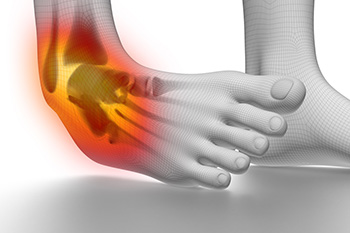
People of all ages can suffer from ankle sprains. Ankle sprains are caused by the tearing or stretching of ankle ligaments, especially following ankle rolls or twists. Serious tumbling or tripping incidents can also cause ligament damage that may result in ankle sprains. Depending on the amount of swelling in the ligament and tissue, an ankle sprain can be categorized as mild, moderate, or severe. Individuals suffering from these sprains are susceptible to bruising, discomfort, and pain while walking or running. Although many ankle sprains will resolve themselves on their own, utilizing healthy treatment practices can rebuild muscle in the ankle to ward off future sprains and injuries. Specifically, those suffering from an ankle sprain can reduce the amount of time spent on their feet, apply ice intermittently to the sprain, or temporarily use crutches. Other treatments include taking anti-inflammatory drugs and elevating the ankle to a height above the heart. It is never too late to take steps in consultation with your podiatrist to treat or prevent ankle sprains.
Ankle sprains are common but need immediate attention. If you need your feet checked, contact Dr. Gerald Perelman from Ohio. Our doctor can provide the care you need to keep you pain-free and on your feet.
How Does an Ankle Sprain Occur?
Ankle sprains take place when the ligaments in your ankle are torn or stretched beyond their limits. There are multiple ways that the ankle can become injured, including twisting or rolling over onto your ankle, putting undue stress on it, or causing trauma to the ankle itself.
What Are the Symptoms?
Preventing a Sprain
Treatment of a Sprain
Treatment of a sprain depends on the severity. Many times, people are told to rest and remain off their feet completely, while others are given an air cast. If the sprain is very severe, surgery may be required.
If you have suffered an ankle sprain previously, you may want to consider additional support such as a brace and regular exercises to strengthen the ankle.
If you have any questions please feel free to contact our office located in Wilmington, OH . We offer the newest diagnostic and treatment technologies for all your foot and ankle needs.
 Gerald K. Perelman - Default