Wilmington (937) 382-2347
Fax
(513) 932-1606
Wilmington (937) 382-2347
Fax
(513) 932-1606
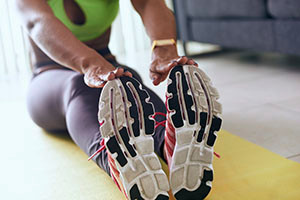
Research has shown that runners incur more injuries than other athletes. This can happen from a lack of stretching, in addition to the repetitive force that accompanies running. There are methods to prevent running injuries that can be applied to any type of running, ranging from running in several marathons to jogging on the weekend. It is beneficial to increase mileage and speed gradually, which can give the muscles and ligaments adequate time to adjust. Additionally, drinking enough water is important in preventing dehydration, especially after running is completed. It is helpful to consume sources of protein and carbohydrates, which can repair the muscles. It is important to stretch the legs properly before and after running, which is needed to prevent running injuries. If you would like to learn about foot-strengthening stretches that can help to prevent running injuries, it is suggested that you confer with a podiatrist who can provide you with useful information.
Exercising your feet regularly with the proper foot wear is a great way to prevent injuries. If you have any concerns about your feet, contact Dr. Gerald Perelman of Ohio. Our doctor will treat your foot and ankle needs.
How to Prevent Running Injuries
Many common running injuries are caused by overuse and overtraining. When the back of the kneecap starts wearing out and starts causing pain in your knee, this is commonly referred to as runner’s knee. Runner’s knee is a decrease in strength in your quadriceps and can occur if you’re not wearing properly fitted or supporting shoes. To prevent runner’s knee, focusing on hip strengthening is a good idea, as well as strengthening your quads to keep the kneecaps aligned.
What Are Some Causes of Running Injuries?
- One cause of a common running injury is called iliotibial band syndrome.
- Plantar fasciitis is also another common injury.
- Stress fractures can occur from overtraining, lack of calcium, or even your running style.
Best Ways to Prevent Running Injuries
- Wear footwear that fits properly and suits your running needs.
- Running shoes are the only protective gear that runners have to safeguard them from injury.
- Make a training schedule. Adding strengthening exercises as well as regular stretching can help keep you strong and limber and can lessen the possibility of injuries.
- Stretching keeps muscles limber; this will help you gain better flexibility.
If you have any questions please feel free to contact our office located in Wilmington, OH . We offer the newest diagnostic and treatment technologies for all your foot and ankle needs.
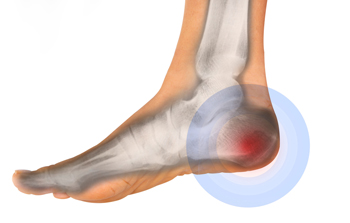
People who have heel pain may notice it is worse after awakening in the morning. A common reason people have heel pain can come from a condition that is called plantar fasciitis. It happens when the plantar fascia, which connects the heel to the toes on the sole of the foot, becomes inflamed or irritated. A heel spur can also be a source of heel pain, and is defined as a bony growth that develops on the underside of the heel. Both conditions can be caused by wearing shoes that do not fit correctly, or if weight has gradually been gained. There are specific stretches that may help to relieve heel pain. A calf stretch can be effective in accomplishing this and is done by standing on a step and lowering one heel until a gentle stretch is felt. This can be done on both feet, repeated several times. If you have heel pain, it is strongly suggested that you are under the care of a podiatrist who can provide you with treatment options that are best for you.
Many people suffer from bouts of heel pain. For more information, contact Dr. Gerald Perelman of Ohio. Our doctor can provide the care you need to keep you pain-free and on your feet.
Causes of Heel Pain
Heel pain is often associated with plantar fasciitis. The plantar fascia is a band of tissues that extends along the bottom of the foot. A rip or tear in this ligament can cause inflammation of the tissue.
Achilles tendonitis is another cause of heel pain. Inflammation of the Achilles tendon will cause pain from fractures and muscle tearing. Lack of flexibility is also another symptom.
Heel spurs are another cause of pain. When the tissues of the plantar fascia undergo a great deal of stress, it can lead to ligament separation from the heel bone, causing heel spurs.
Why Might Heel Pain Occur?
Treatments
Heel pain should be treated as soon as possible for immediate results. Keeping your feet in a stress-free environment will help. If you suffer from Achilles tendonitis or plantar fasciitis, applying ice will reduce the swelling. Stretching before an exercise like running will help the muscles. Using all these tips will help make heel pain a condition of the past.
If you have any questions please contact our office located in Wilmington, OH . We offer the newest diagnostic and treatment technologies for all your foot and ankle needs.

If left untreated, an ingrown toenail can lead to more serious concerns, such as an infection. Knowing proper nail care can help in the prevention of an ingrown toenail. Give us a call, and get treated!
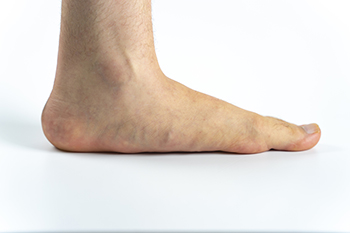
There may be advantages for people who have flat feet. Flat feet are defined as the natural ability the feet have to roll inward, which may be helpful while running or jumping. The structure of the foot can absorb the shock, which may come easier than to people who have high arches. Additionally, the body may propel faster in people who are flat footed, and stability and balance may be enhanced. Despite this uplifting knowledge, there are some disadvantages to having flat feet. These can include difficulty in choosing shoes that fit correctly, and lower back pain may gradually develop. Observing flat feet can easily be done by standing with both feet on the floor. People who have flat feet will notice there is no gap between the floor and their feet. The majority of babies are born with flat feet, and the arches generally develop by the teenage years. Flat feet in adults may be the result of becoming obese, running or walking while barefoot, or possibly from lifting heavy weights. If you have flat feet, it is strongly suggested that you are under the care of a podiatrist who can help you with useful information on how to manage this condition.
Flatfoot is a condition many people suffer from. If you have flat feet, contact Dr. Gerald Perelman from Ohio. Our doctor will treat your foot and ankle needs.
What Are Flat Feet?
Flatfoot is a condition in which the arch of the foot is depressed and the sole of the foot is almost completely in contact with the ground. About 20-30% of the population generally has flat feet because their arches never formed during growth.
Conditions & Problems:
Having flat feet makes it difficult to run or walk because of the stress placed on the ankles.
Alignment – The general alignment of your legs can be disrupted, because the ankles move inward which can cause major discomfort.
Knees – If you have complications with your knees, flat feet can be a contributor to arthritis in that area.
Symptoms
Treatment
If you are experiencing pain and stress on the foot you may weaken the posterior tibial tendon, which runs around the inside of the ankle.
If you have any questions please feel free to contact our office located in Wilmington, OH . We offer the newest diagnostic and treatment technologies for all your foot and ankle needs.
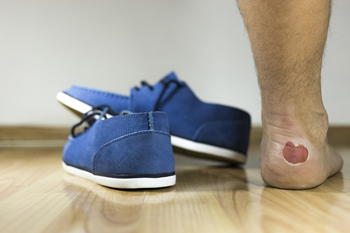 Sometimes, when an individual purchases a new pair of shoes and wears them for the first time, a blister can develop on the back of their heels where the material rubs up against the skin. Although blisters can sometimes be small, they can cause a person great discomfort and pain. Heel blisters form essentially because of the friction against the skin. This is why it is essential for individuals to ensure that they are purchasing footwear that fits correctly in the first place. Shoes ought to be spacious enough that the toes and heels have sufficient room. However, shoes should not be so big that the feet ultimately fall out of the shoes. If you are someone that is currently struggling with blisters, it is suggested that you schedule an appointment with a podiatrist today about any potential treatment and prevention plans.
Blisters are prone to making everyday activities extremely uncomfortable. If your feet are hurting, contact Dr. Gerald Perelman of Ohio. Our doctor can provide the care you need to keep you pain-free and on your feet.
Foot Blisters
Foot blisters develop as a result of constantly wearing tight or ill-fitting footwear. This happens due to the constant rubbing from the shoe, which can often lead to pain.
What Are Foot Blisters?
A foot blister is a small fluid-filled pocket that forms on the upper-most layer of the skin. Blisters are filled with clear fluid and can lead to blood drainage or pus if the area becomes infected.
How Do Blisters Form?
Blisters on the feet are often the result of constant friction of skin and material, usually by shoe rubbing. Walking in sandals, boots, or shoes that don’t fit properly for long periods of time can result in a blister. Having consistent foot moisture and humidity can easily lead to blister formation.
Prevention & Treatment
It is important to properly care for the affected area in order to prevent infection and ease the pain. Do not lance the blister and use a Band-Aid to provide pain relief. Also, be sure to keep your feet dry and wear proper fitting shoes. If you see blood or pus in a blister, seek assistance from a podiatrist.
If you have any questions, please feel free to contact our office located in Wilmington, OH . We offer the newest diagnostic and treatment technologies for all your foot care needs.
 Gerald K. Perelman - Default